
Excessive barking is one of the most common complaints from dog owners - and neighbors. But shock collars, despite being widely sold, cause pain and fear and often make anxiety-driven barking worse in the long run. There are highly effective, humane methods for reducing excessive barking that work with your dog's psychology instead of against it.
First: Understand Why Your Dog Is Barking
Dogs bark for different reasons, and the right intervention depends entirely on the cause. Common triggers include: alarm barking (stranger at the door), boredom barking (not enough mental/physical stimulation), anxiety barking (separation anxiety or fear), reactive barking (other dogs, cars, squirrels), and attention-seeking barking (learned behavior that has been rewarded). Identify which type applies to your dog before choosing a method.
7 Humane Methods to Reduce Excessive Barking
1. Ultrasonic Training Devices
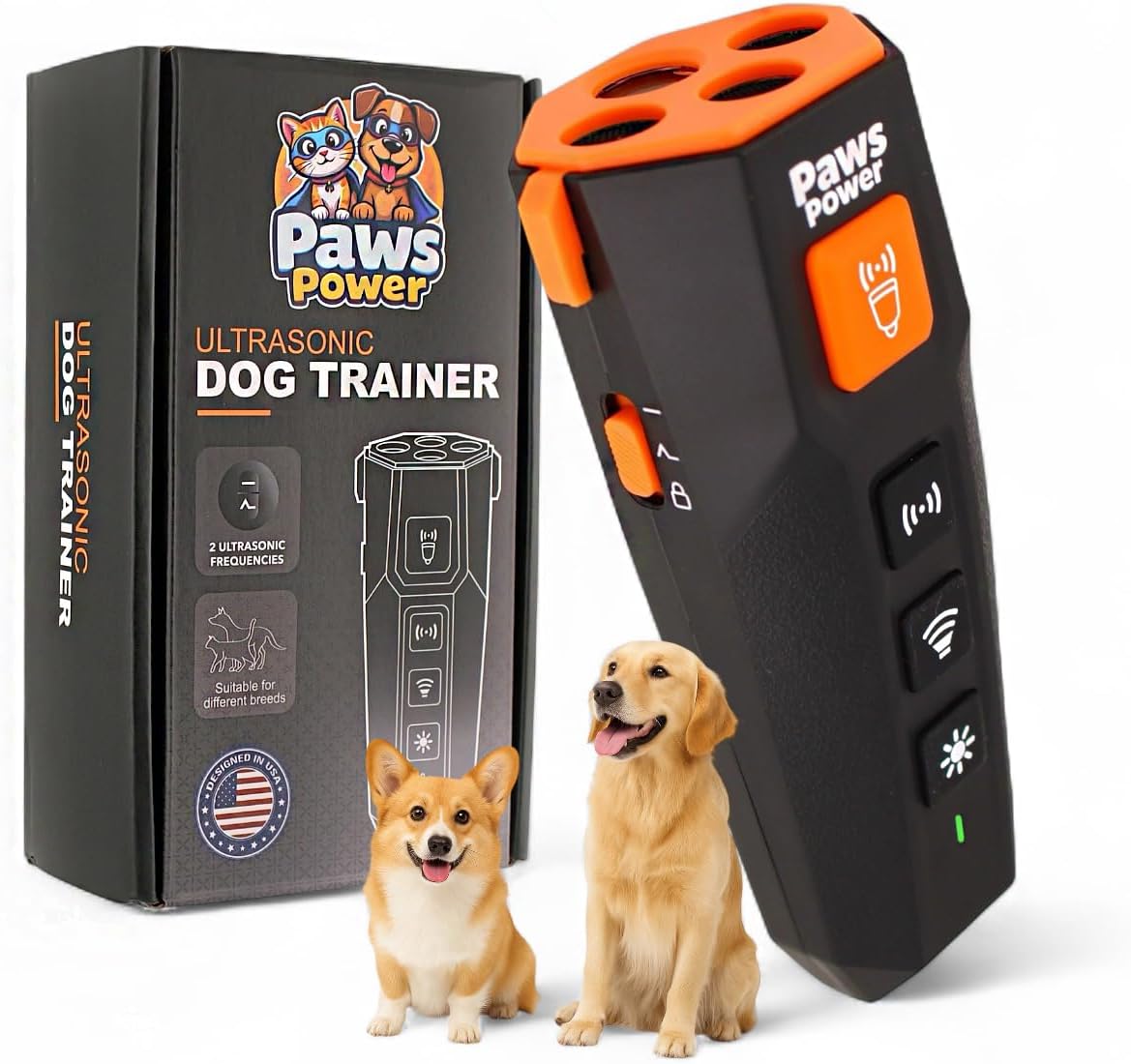
Ultrasonic dog trainers emit a frequency between 25–30kHz that is completely inaudible to humans but immediately attention-grabbing to dogs. When your dog barks, you press the button - the sound interrupts the barking behavior without any pain or physical contact. Over time, the dog learns to associate excessive barking with the unwanted sound and self-corrects. This method works at up to 23 feet away, making it effective both indoors and for neighbor dogs. Effective on approximately 85–90% of dogs aged 6 months to 8 years.
2. The 'Quiet' Command with Positive Reinforcement
When your dog barks, calmly say 'Quiet' in a firm, neutral tone. Wait for 2 seconds of silence - then immediately reward with a high-value treat and praise. Do not reward during barking, even by giving attention. Repeat this consistently for 2–3 weeks. Most dogs learn the 'Quiet' command reliably within 3–6 weeks of consistent training.
3. Remove the Trigger
If your dog barks at people or cars passing by the window, the simplest solution is to block that view - frosted window film, moving furniture, or placing your dog in a different room. This isn't avoidance; it's environmental management that immediately reduces stimulus-driven barking while you work on longer-term training.
4. Increase Physical and Mental Exercise
The single most overlooked cause of excessive barking is simply not enough exercise and mental stimulation. A dog that has had 60 minutes of vigorous physical activity and 20 minutes of mental challenge (puzzle feeders, training sessions, nose work) is significantly calmer and far less likely to engage in nuisance barking. Most people dramatically underestimate how much exercise working and herding breeds actually need.
5. Desensitization and Counter-Conditioning
For dogs that bark at specific triggers (other dogs, doorbells, strangers), systematic desensitization is one of the most effective long-term solutions. Present the trigger at a low intensity - far away, quiet recording of the doorbell - while continuously feeding high-value treats. Gradually increase intensity over weeks. The dog learns to associate the formerly scary trigger with good things instead of alarm.
6. Never Accidentally Reward Barking
This is the most common mistake owners make. If your dog barks and you give them attention - even negative attention like yelling 'Quiet!' - you have rewarded the barking with the interaction they wanted. Attention-seeking barking must be completely ignored. The moment your dog stops barking, even briefly, reward that silence.
7. Consult a Certified Professional Trainer
If excessive barking is rooted in serious separation anxiety or fear-based reactivity, it requires individualized intervention from a certified professional trainer or veterinary behaviorist. These are medical behavioral issues - not training failures - and they respond best to a combination of behavioral modification and, in some cases, veterinary-prescribed medication.
Expert Tip
Pro Tip: Consistency is the non-negotiable ingredient in all of these methods. Barking that is sometimes rewarded and sometimes not (intermittent reinforcement) is actually the hardest pattern to break. Everyone in the household must respond to barking the same way, every time.
The Paws Power Ultrasonic Dog Trainer offers 6 training modes including dual ultrasonic frequencies (25kHz and 25–30kHz), LED flashlight, and sound - with a 23ft range and 60-day rechargeable battery. 100% safe, no shock, no collar.
Shop on Amazon