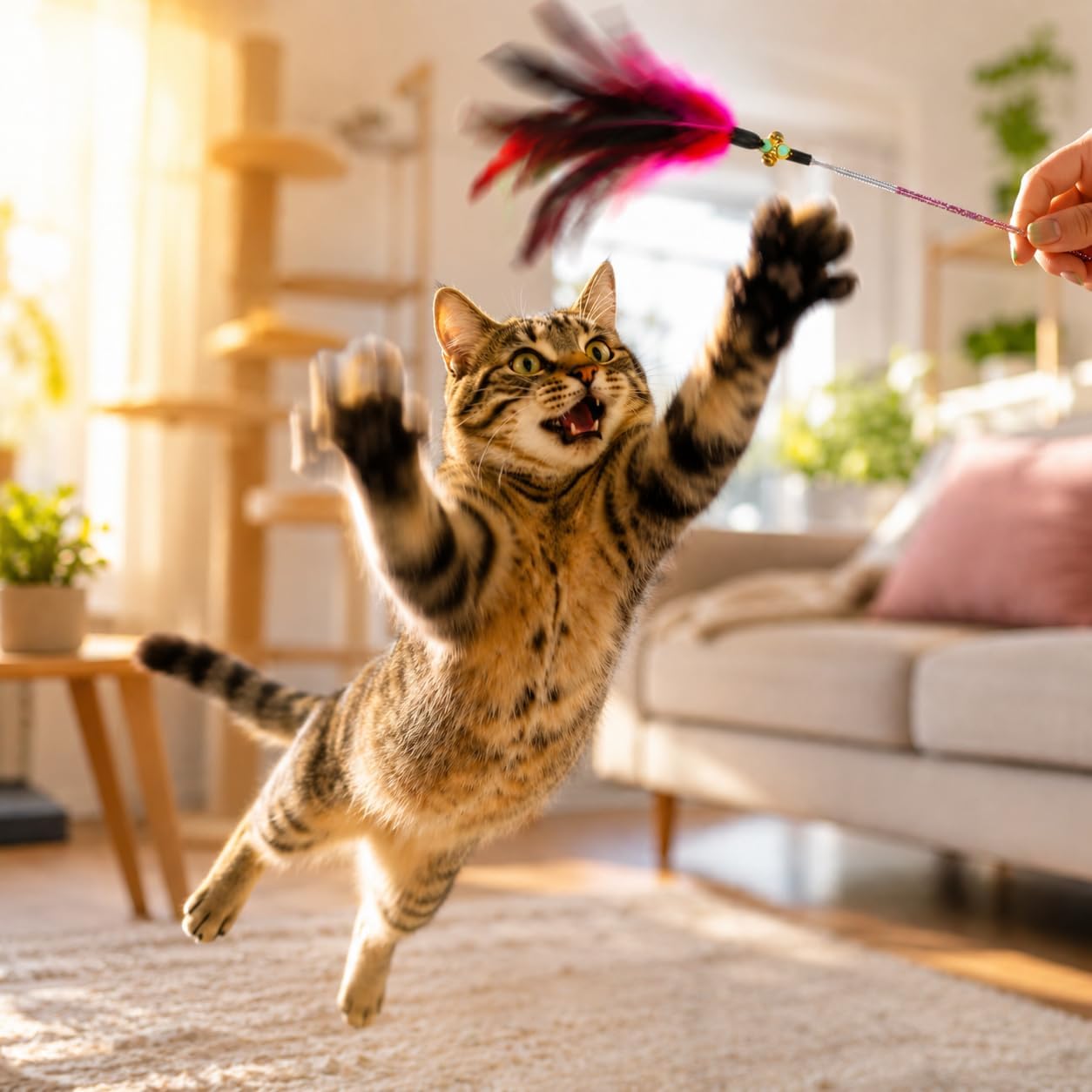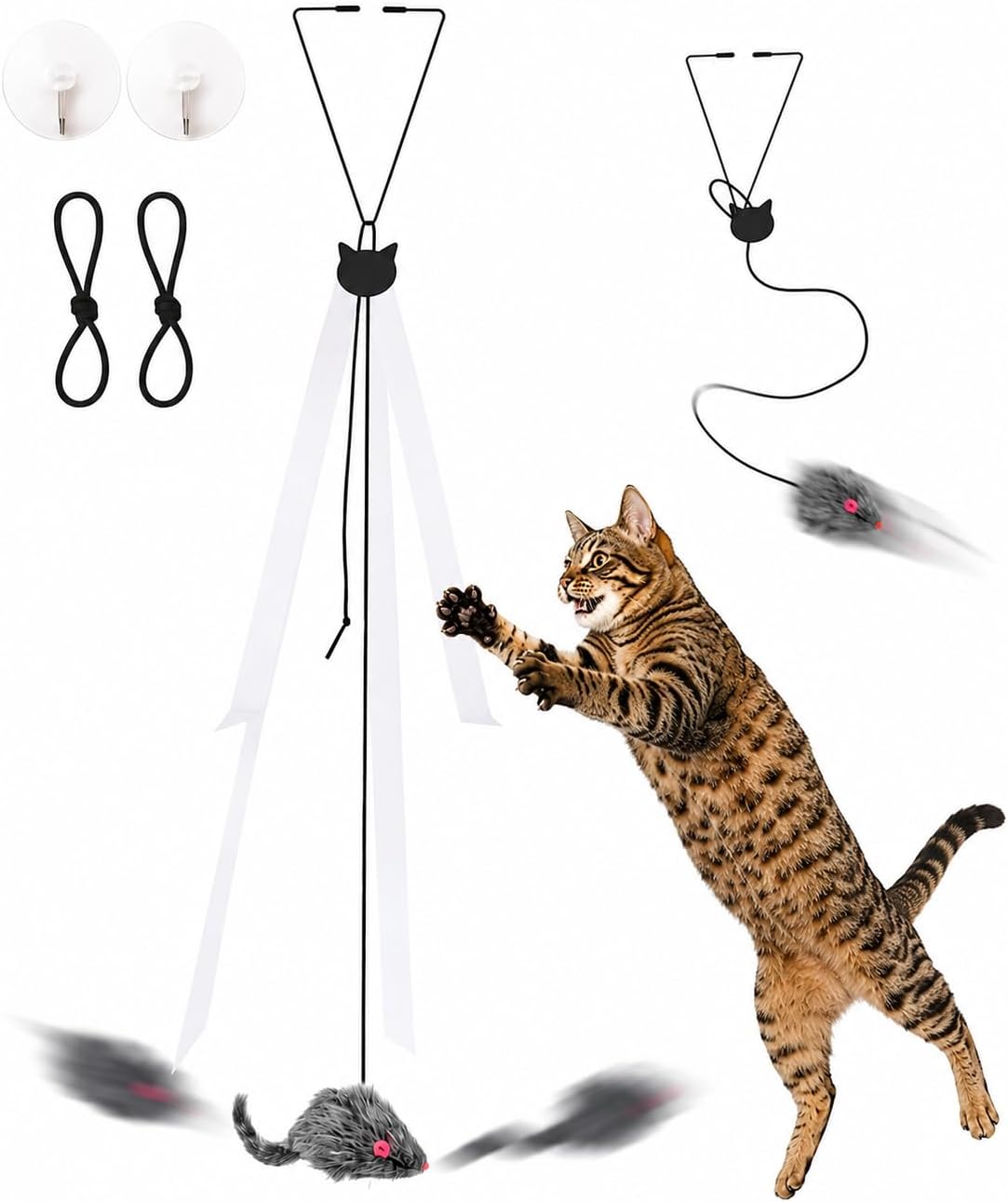
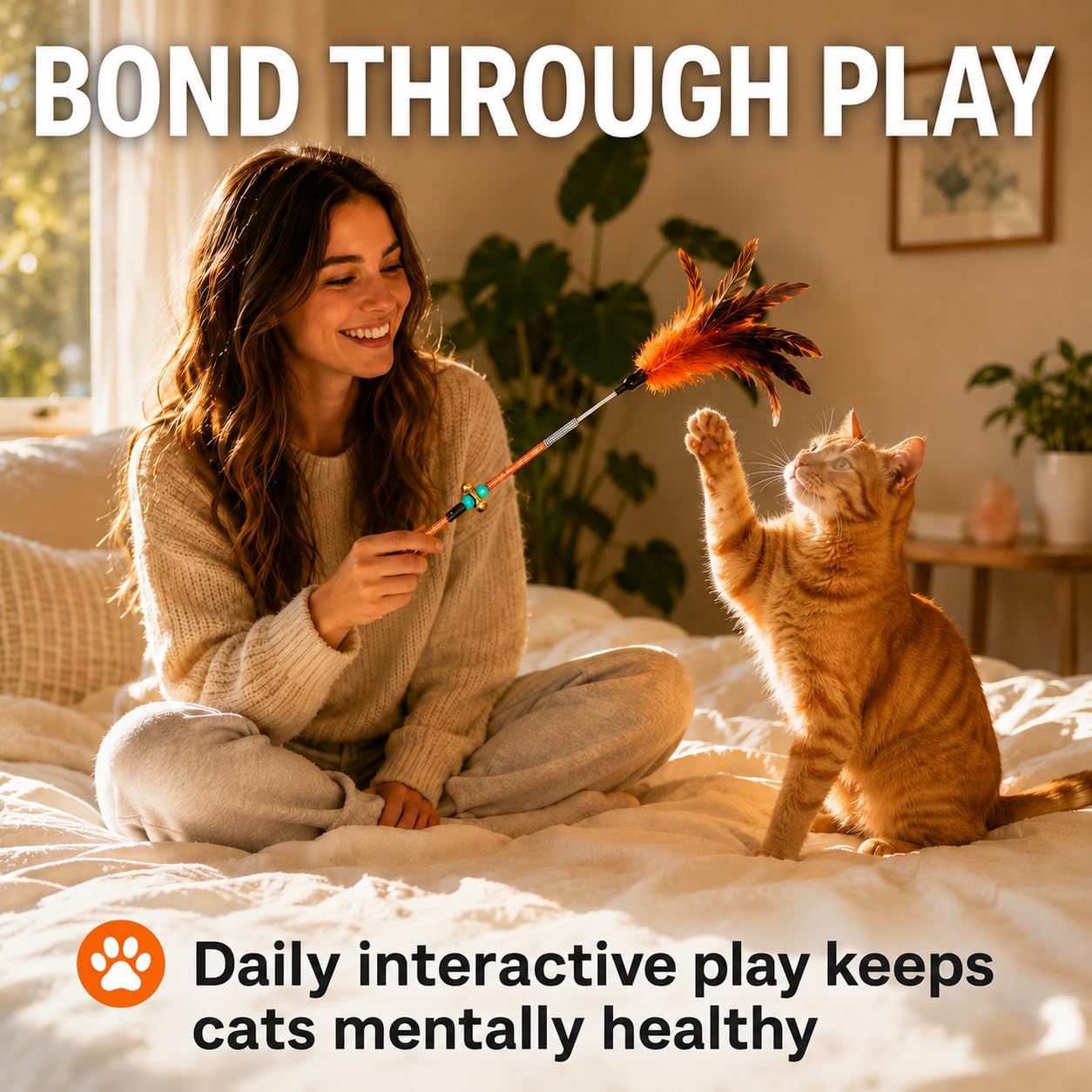
Most cat owners think of play as entertainment - something nice to do when you have a few extra minutes. Research in animal behavior and veterinary medicine tells a different story. Regular interactive play is one of the most powerful interventions available for a cat's physical health, psychological wellbeing, and human-animal bond. Here is what the science actually shows.
Play Satisfies the Hunt Cycle
A cat's brain is hardwired for sequential predatory behavior: locate prey, stalk, chase, pounce, catch, kill, eat. This sequence - called the hunt cycle - triggers a cascade of neurological and hormonal responses that feel inherently satisfying to cats. When a cat completes this sequence during play (ending the session with a 'caught' toy followed by a small treat), their cortisol drops and serotonin levels rise. Incomplete hunt cycles, where the cat chases but never catches anything, leave cats frustrated - which is why ending each play session with a 'catch' matters.
Physical Health Benefits
- Obesity prevention: indoor cats are twice as likely to be overweight as outdoor cats; 15 minutes of active play per day measurably impacts caloric burn
- Joint health: regular dynamic movement prevents the stiffness and arthritis that sedentary cats develop
- Cardiovascular conditioning: active chase play elevates heart rate and improves cardiorespiratory fitness
- Coordination and proprioception: complex play movements (leaping, dodging, landing) maintain neuromuscular coordination
Psychological Benefits
- Reduces anxiety and stress: the hunt cycle produces a natural relaxation response on completion
- Prevents boredom-driven destructive behavior: scratching, over-grooming, furniture destruction, aggression
- Improves sleep quality: cats that play actively have healthier sleep-wake cycles
- Reduces inter-cat aggression in multi-cat households by providing an appropriate outlet for predatory energy
The Bonding Effect
Research on human-animal bond quality shows that cats who play interactively with their owners display significantly more affiliative behavior - approaching, slow blinking, grooming their owners, and sleeping nearby. This is because interactive play places you in the role of 'hunting partner' in your cat's mental model. Cats that play with their owners are also easier to handle during veterinary visits, show less fear of strangers, and adapt better to household changes.
How to Play Correctly
- 1Use a wand toy - never your hand. Hands as toys teaches cats that biting and scratching hands is acceptable.
- 2Mimic prey movement: slow, cautious movement followed by sudden bursts, hiding behind objects, unpredictable direction changes.
- 3Let your cat catch the toy regularly - especially toward the end of the session.
- 4End every session by offering a small treat or meal, completing the hunt-eat sequence.
- 5Aim for two 10–15 minute sessions per day for adult cats; kittens need more frequent, shorter sessions.
Expert Tip
Pro Tip: The best time to play with your cat is just before their scheduled mealtimes. Hunt, catch, eat - this sequence mirrors their natural rhythm and produces the deepest satisfaction and the longest post-play calm.
Paws Power feather wands are designed to mimic real prey flight - 22 inches long with a flexible spring tip, jingle bells, and real natural feathers. Five different styles in one set for built-in rotation.
Shop on Amazon