Indoor cats live longer, healthier lives than outdoor cats - but they come with a trade-off: all that natural hunting instinct has nowhere to go. Without enough mental and physical stimulation, cats develop anxiety, depression, destructive behavior, and obesity. The good news is that solving indoor cat boredom is easier than most owners think. Here are 10 strategies that actually work.
Why Indoor Cats Get Bored (and What Happens When They Do)
In the wild, a cat spends 6–8 hours per day hunting - stalking, chasing, pouncing, and catching prey. Indoor cats have food delivered in a bowl, so that entire behavioral drive has nowhere to channel. The result is chronic understimulation, which shows up as excessive meowing, over-grooming, scratching furniture, aggression, or retreating and sleeping 20+ hours a day.
10 Proven Ways to Keep Indoor Cats Mentally Stimulated
1. Schedule Daily Wand Play Sessions
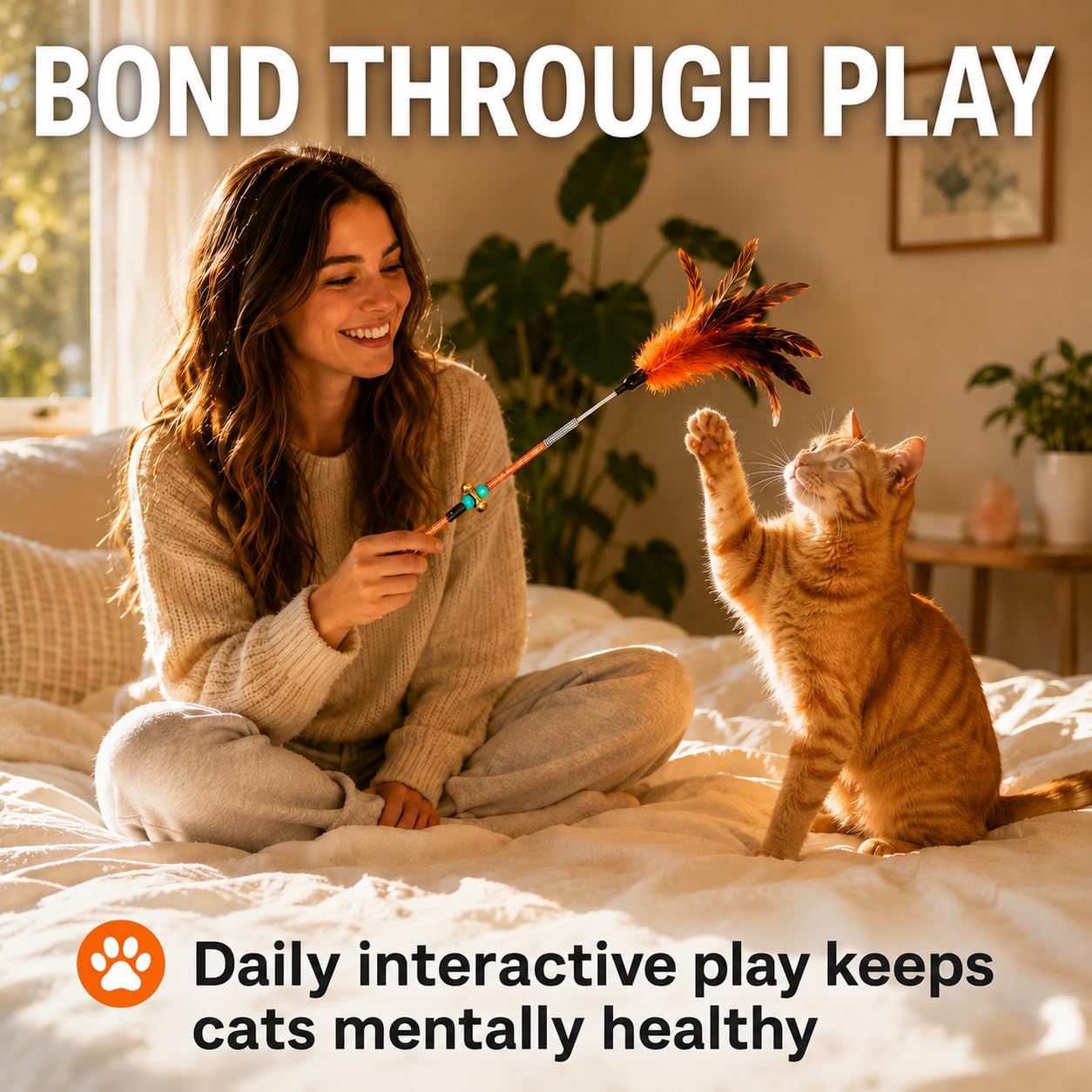
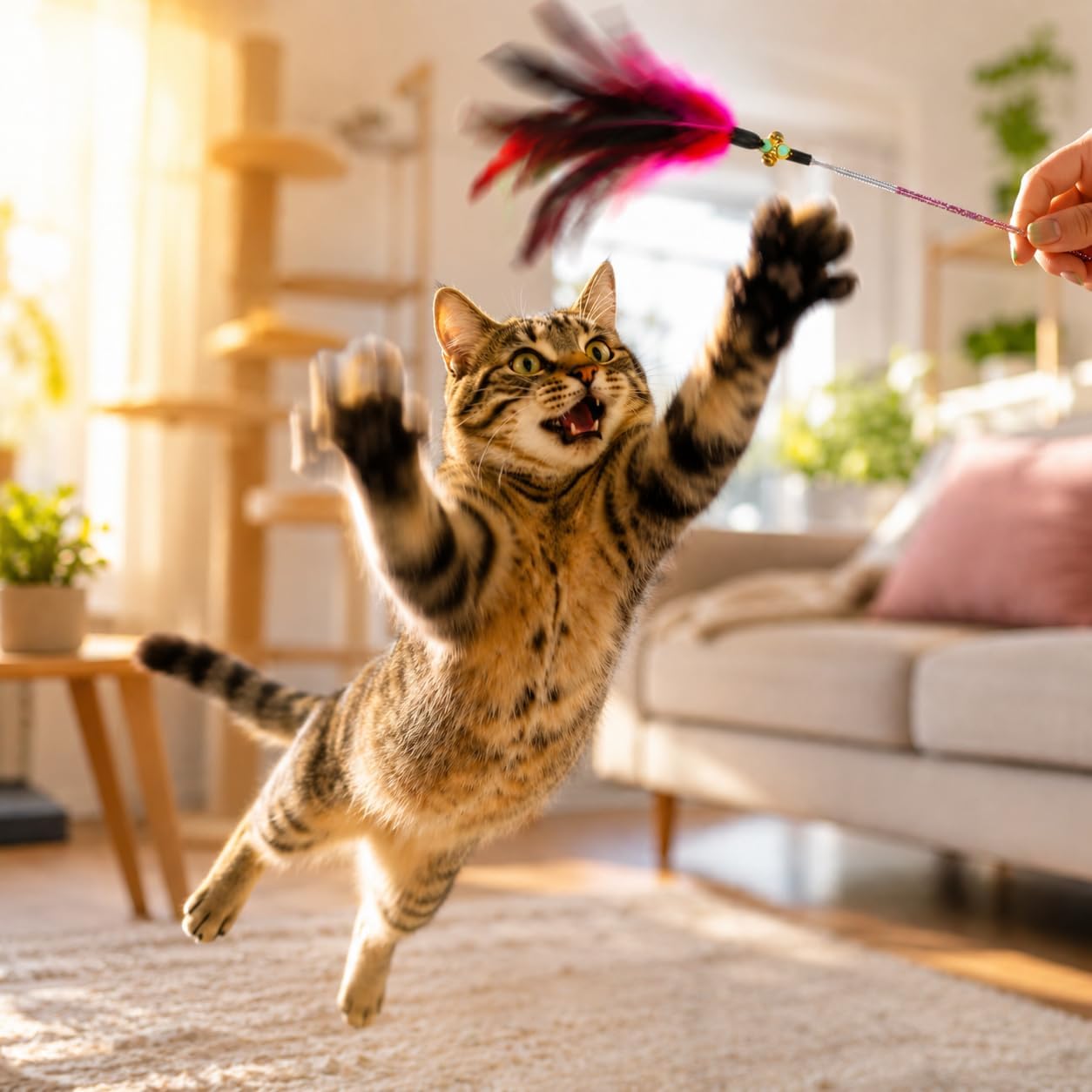
Interactive wand toys are the single most effective enrichment tool for indoor cats. A 10–15 minute wand play session twice a day satisfies the full hunt cycle - stalk, chase, pounce, catch - and dramatically reduces anxiety-driven behaviors. The key is variability: rotate different wand styles so your cat never loses interest. A feather wand set with 5 different feather styles keeps novelty high and engagement locked in session after session.
2. Use Puzzle Feeders Instead of Bowls
Feeding your cat from a bowl gives them zero mental engagement. Puzzle feeders make your cat work for their food the way hunting does - problem-solving, sniffing, pawing. Start with easy puzzles and gradually increase difficulty as your cat improves. This alone can reduce overeating and weight-related health issues.
3. Add Vertical Space
Cats are vertical animals - they feel safest and most confident when they can survey their territory from height. Cat trees, wall shelves, and window perches give indoor cats the vertical dimension they instinctively crave. Position a perch near a window with a bird feeder outside for maximum enrichment value.
4. Rotate Toys Weekly
Cats habituate to toys quickly - what was exciting on Monday is invisible by Friday. Keep a rotation of 6–10 toys and swap out 2–3 at a time every week. 'New' toys (even old ones returning after a few weeks) trigger fresh exploration and hunting behavior.
5. Install a Bird Feeder Outside a Window
Natural wildlife is the original cat TV. A bird feeder positioned within 3 feet of a window your cat can access gives hours of passive entertainment. Add a squirrel feeder nearby for even more variety. This requires zero effort from you after initial setup.
6. Try Catnip and Silver Vine
Approximately 50–70% of cats respond to catnip, and nearly 80% respond to silver vine - an even more potent alternative. Catnip and silver vine toys produce a temporary euphoric response that re-engages even low-energy cats. Use them in moderation (2–3 times per week) so the response doesn't diminish.
7. Play 'Foraging' Games
Hide small amounts of your cat's kibble or treats around the house in different spots each day. This mimics the foraging behavior cats would naturally engage in outdoors and turns their entire living space into an enrichment environment. It takes 60 seconds of your time and provides 20–30 minutes of engagement.
8. Use Self-Play Toys for Solo Sessions
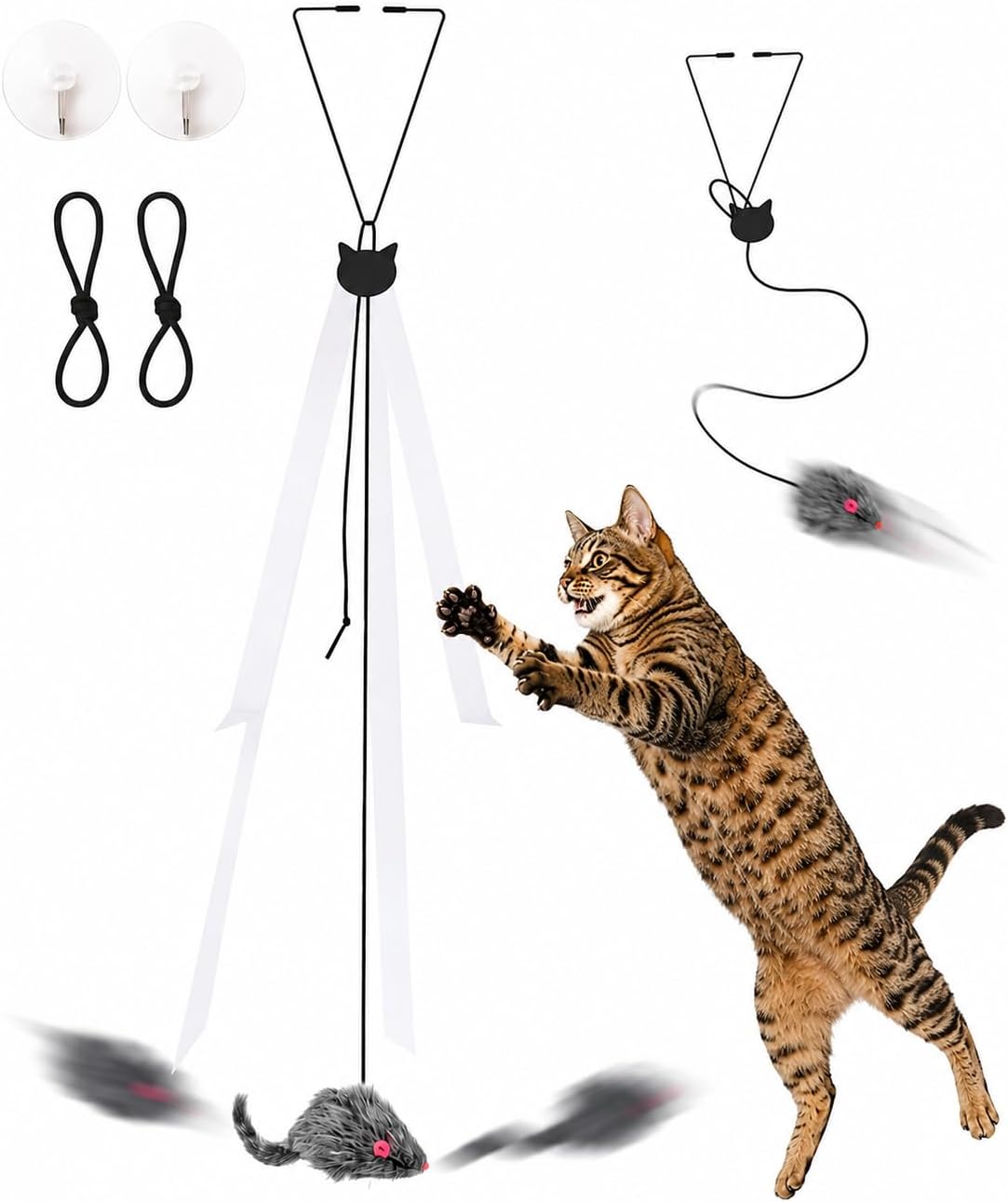
You can not play interactively with your cat 24 hours a day, but some excellent self-play toys can bridge the gap. Hanging door toys with feather mice give cats autonomous hunting sessions when you're at work. Electronic flapping bird toys with realistic chirping sounds trigger predatory instincts automatically. These are best used as supplements to interactive play, not replacements.
9. Consider a Second Cat
For cats without existing territorial aggression, a companion cat is the most comprehensive enrichment solution available. Cats in bonded pairs engage in social grooming, mutual play, and co-exploration that no toy can replicate. Introduce cats slowly using a scent-swapping protocol before allowing direct contact.
10. Create 'Hunting' Sessions Before Meals
In the wild, cats hunt before they eat. Replicating this sequence - 10 minutes of active wand play followed immediately by a meal - dramatically reduces food aggression, anxiety around mealtimes, and post-meal hyperactivity. It also deepens the bond between you and your cat by making you part of their hunt-and-reward cycle.
Expert Tip
Pro Tip: The best way to know if your cat is getting enough stimulation is to watch for these signs of a satisfied, enriched cat: slow blinking at you, relaxed body language after play, steady appetite, and sleeping in open (not hidden) spots. A stressed or bored cat hides, over-grooms, or vocalizes excessively.
The Paws Power Cat Feather Wand Set - 5 different wand styles in one pack - is designed specifically for the rotation strategy above. Real natural feathers, jingle bells, 22-inch length for scratch-free play.
Shop on Amazon