You buy your cat an exciting new toy. You place it on the floor. Your cat sniffs it once, stares at it, and walks away. Sound familiar? This is not your cat being ungrateful - it is a deeply ingrained survival behavior called neophobia. Understanding why cats respond this way, and how to work with it, is the difference between a toy that gets used and one that disappears under the couch.
Why Cats Are Suspicious of New Things
In the wild, novel objects are potential threats until proven otherwise. A strange object that suddenly appears in your cat's territory needs to be investigated slowly and carefully before the cat decides it's safe. This threat-assessment behavior - neophobia - is especially pronounced in cats compared to dogs. It's not stubbornness; it's risk management.
The 5-Step Introduction Protocol
Step 1: Let It Sit
Place the new toy near your cat's regular resting area and leave it alone for 24–48 hours. Let your cat investigate at their own pace without any pressure or encouragement from you. This passive familiarization period is essential.
Step 2: Add Scent
Rub the toy briefly with a cloth that has your cat's scent on it - from their favorite sleeping spot. Familiar scent dramatically reduces neophobic response. Alternatively, a small amount of catnip rubbed onto the toy increases positive association.
Step 3: Animate It Yourself
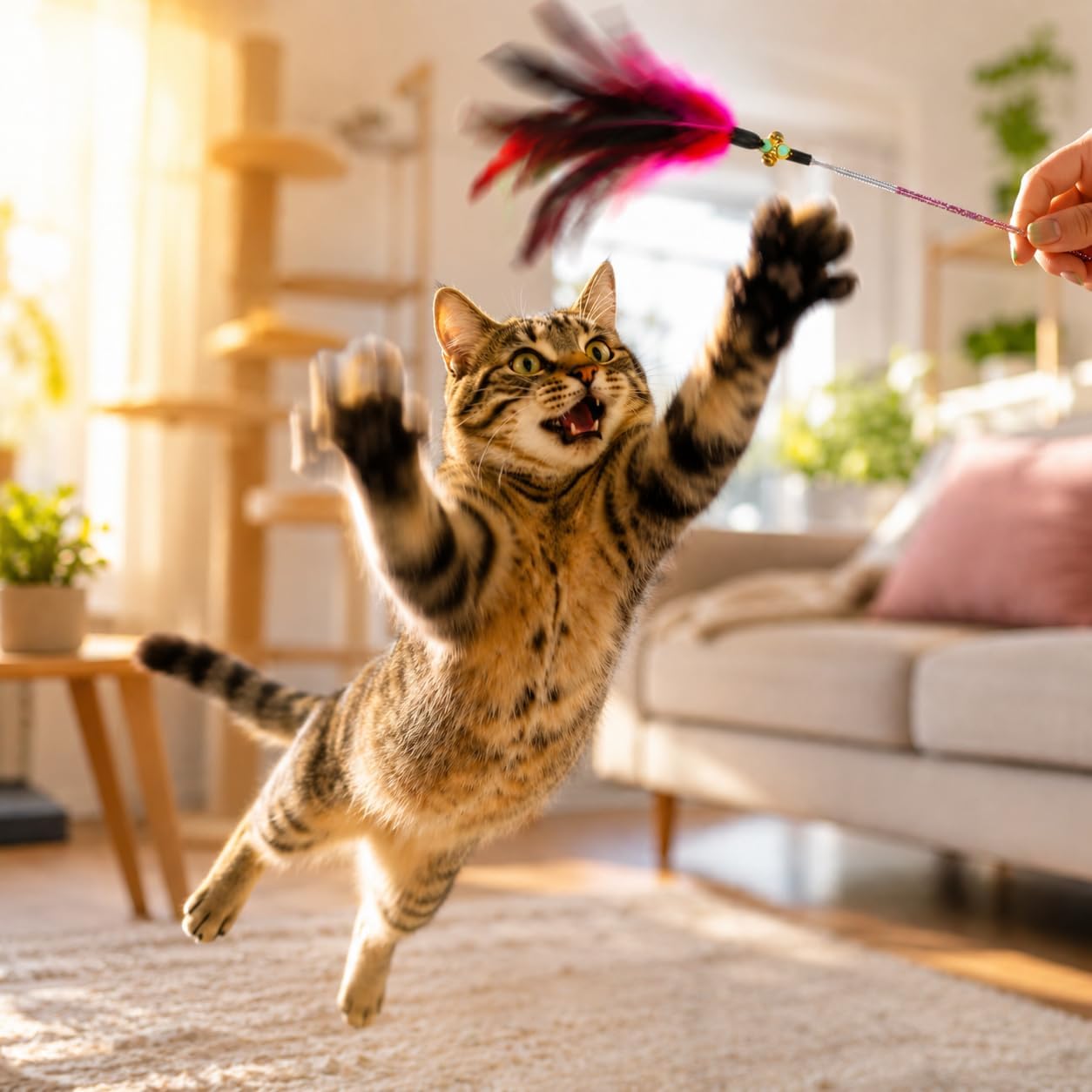
After the familiarization period, animate the toy yourself with natural, prey-like movements. For a wand toy, start with very slow, ground-level movement that gradually increases in speed and complexity as your cat's interest builds. Never wave it directly in your cat's face - approach from the periphery of their vision.
Step 4: Let Them Catch It
Within the first session, make sure your cat successfully catches and holds the toy at least twice. The catch is the reward that makes the entire hunt sequence worthwhile. A toy that your cat can never catch produces frustration, not enjoyment.
Step 5: End Before They Disengage
End the play session while your cat is still interested and engaged - not after they've walked away. Stopping while they still want more keeps the toy novel and desirable. Immediately following play with a treat or small meal completes the positive association.
Expert Tip
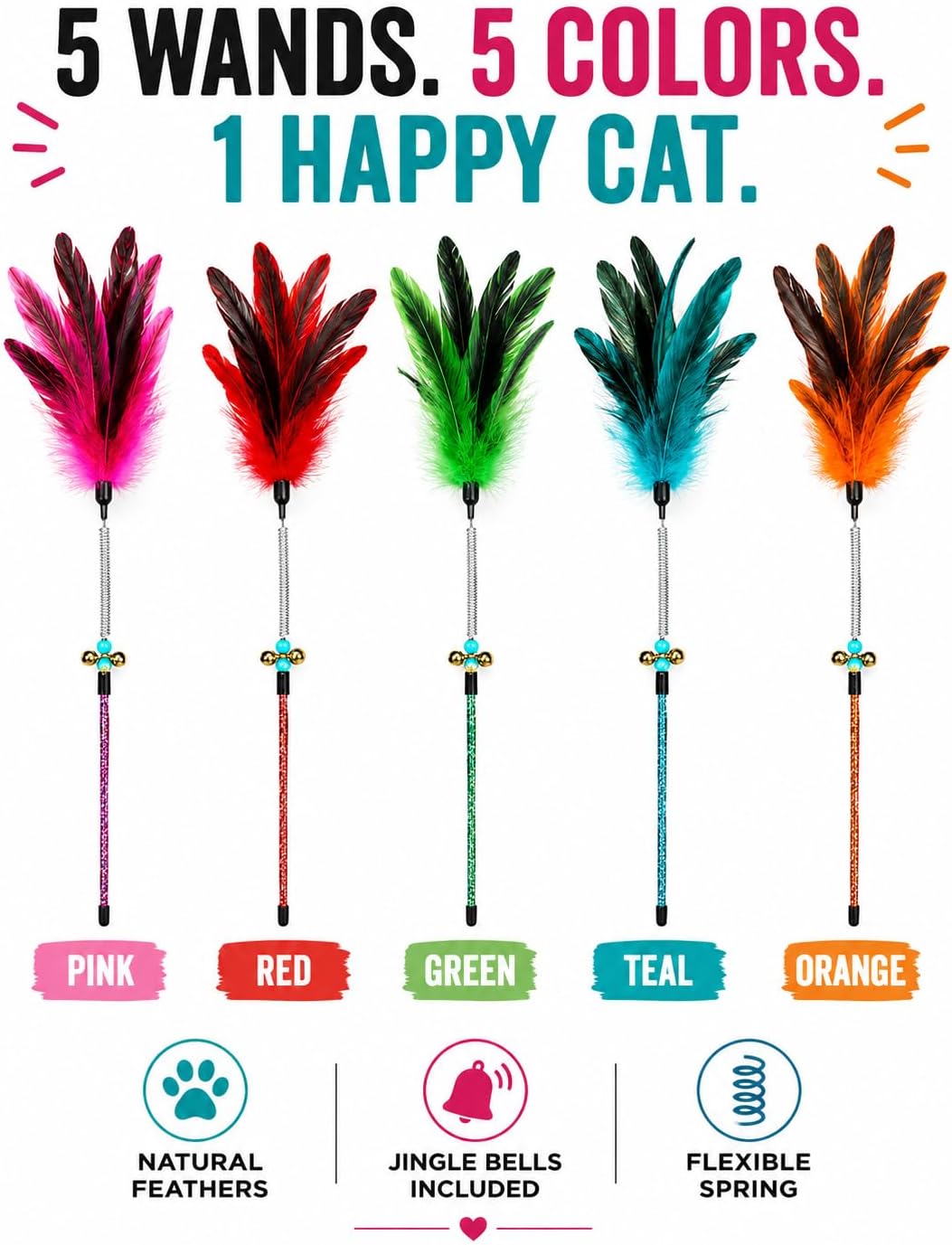
Pro Tip: If your cat ignores a toy completely even after following these steps, the toy may simply not match their prey preference. Some cats strongly prefer feathered toys (bird-oriented hunters), others prefer small furry toys (rodent-oriented hunters). Try a different texture or shape.
The Paws Power Feather Wand Set includes 5 different styles - giving you built-in variety to match your cat's specific prey preference and maintain novelty across every session.
Shop on Amazon